

Hello, how are you all doing? Here we will introduce some fun events in Japan.
This article is designed so that you can also view and study in Japanese.
Japanese name:祇園祭
Event period:July
Venue:Kyoto
A month of elegance and prayer inherited by the thousand-year-old capital
名称:祇園祭
開催期間:7月
開催地:京都
千年の都に受け継がれる、優雅さと祈りのひと月
【history】
The Gion Festival is one of Japan’s most famous festivals, held every year from July 1 to 31 in Kyoto’s Higashiyama Ward, centered around Yasaka Shrine.
Its origins are ancient, dating back to 869 AD (the 11th year of the Jōgan era) in the Heian period. At that time, in response to an epidemic spreading through the capital, a ritual called ‘Goryō-e’ was started, during which 66 halberds, representing the number of provinces in the country, were erected to offer prayers.
Later, the festival developed with the support of local townspeople, and during the Muromachi to Edo periods, the lavish floats that we see today began to appear. The Gion Festival has been passed down not only as a festival to pray for the end of epidemics but also as a symbol of Kyoto’s town culture.
祇園祭は、毎年7月1日から31日まで、京都市東山区の八坂神社を中心に開催される、日本を代表する祭りの一つです。
その起源は古く、平安時代の貞観11年(869年)にまで遡ります。当時、都で疫病が蔓延したため、「御霊会(ごりょうえ)」と呼ばれる儀式が行われ、国の数を表す66本の戟(おの)を立てて祈祷を捧げました。
その後、町民の支援を受けて祭りは発展し、室町時代から江戸時代にかけて、現在のような豪華な山車が登場しました。祇園祭は、疫病の終息を祈る祭りとしてだけでなく、京都の町文化の象徴として受け継がれてきました。
【Feature】
The greatest attraction of the Gion Festival is its lavish and splendid floats (yamahoko) and the diverse religious ceremonies that continue for a month.
Features of the Yamahoko
So extravagant they are called ‘moving museums’
Decorated with world treasures such as Nishijin textiles, Persian carpets, and tapestries
Some floats exceed 25 meters in height and weigh over 12 tons
Maintained and restored by local townspeople, passed down through generations
Yamahoko Parade
The highlight of the Gion Festival is the yamahoko parade, which is held in two parts:
– Saki Matsuri (Front Festival) on July 17
– Ato Matsuri (Back Festival) on July 24
In particular, the ‘Tsuji-mawashi,’ where a float is turned 90 degrees, is full of excitement and draws loud cheers from the crowd.
【Content】
The Gion Festival is characterized by having many highlights, as it takes place over the course of a month.
Main Events:
Kippu-iri (July 1)
A Shinto ritual that marks the beginning of the festival.
Yamahoko Assembly (around July 10)
A traditional technique is showcased where the floats are constructed using only ropes, without nails.
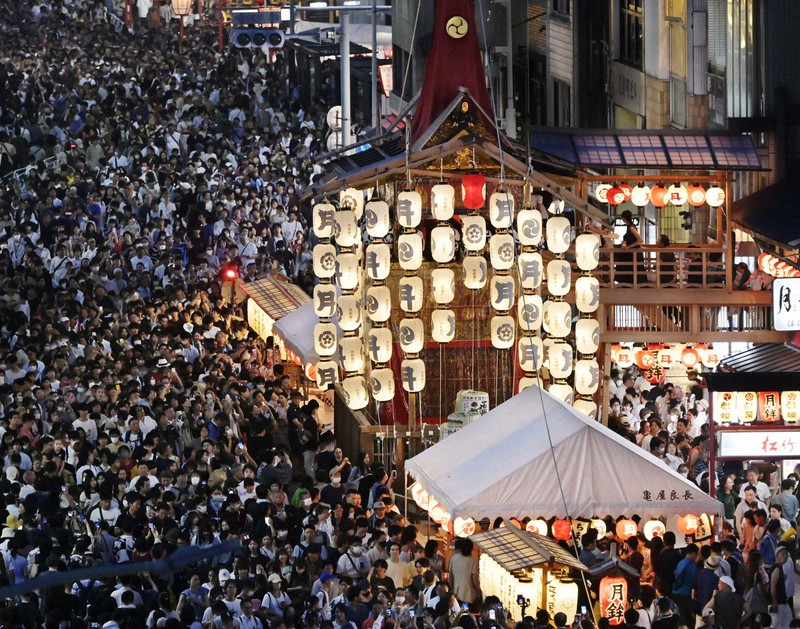
Yoiyama (Evening Festival)
Front Festival: July 14–16
Rear Festival: July 21–23
The floats are illuminated, and the sound of Gion festival music creates a magical night.
Yamahoko Parade (July 17 & 24)
The climax of the festival.
Shinko-sai & Kanko-sai
The mikoshi (portable shrines) of Yasaka Shrine parade through the city, bringing warding off of evil and blessings.
宵山(宵祭)
前祭:7月14日~16日
後祭:7月21日~23日
山車がライトアップされ、祇園囃子の音が響き渡り、幻想的な夜を演出します。
山鉾巡行(7月17日・24日)
祭りのクライマックスです。
神幸祭・還幸祭
八坂神社の神輿が街中を巡行し、厄除けとご利益をもたらします。
How was it? There are still many fun things in Japan. Please be sure to try them when you visit Japan.
Let’s Enjoy!


コメント