

Hello, how are you all doing? Here we will introduce some fun events in Japan.
This article is designed so that you can also view and study in Japanese.
Japanese name:なまはげ
Event period:August
Venue:Akita
A folk event of admonition and prayer embodied in the form of demons
和名:なまはげ
開催期間:8月
開催場所:秋田県
鬼の姿で具現化された戒めと祈りの民俗行事
【history】
Namahage is a traditional event that takes place mainly on the Oga Peninsula in Akita Prefecture, and it is held every year on New Year’s Eve. Its origins are ancient, and it is said to be based on the “Oni-barai” customs that were brought from China during the Nara period.
The word “Namahage” comes from the term “Namomi (fire blisters).” Namomi refers to blisters caused by staying too close to the hearth fire, which were considered a symbol of laziness. In other words, Namahage has been a presence that admonishes laziness and has been rooted in the villagers’ way of life.
なまはげは、秋田県男鹿半島を中心に毎年大晦日に行われる伝統行事です。その起源は古く、奈良時代に中国から伝わった「鬼払い」の風習が起源と言われています。
「なまはげ」という言葉は、「なもみ(火ぶくれ)」に由来しています。「なもみ」とは、囲炉裏の火に近づきすぎることでできる火ぶくれのことで、怠惰の象徴とされていました。つまり、なまはげは怠惰を戒める存在として、村人たちの生活に深く根付いてきたのです。
【Feature】
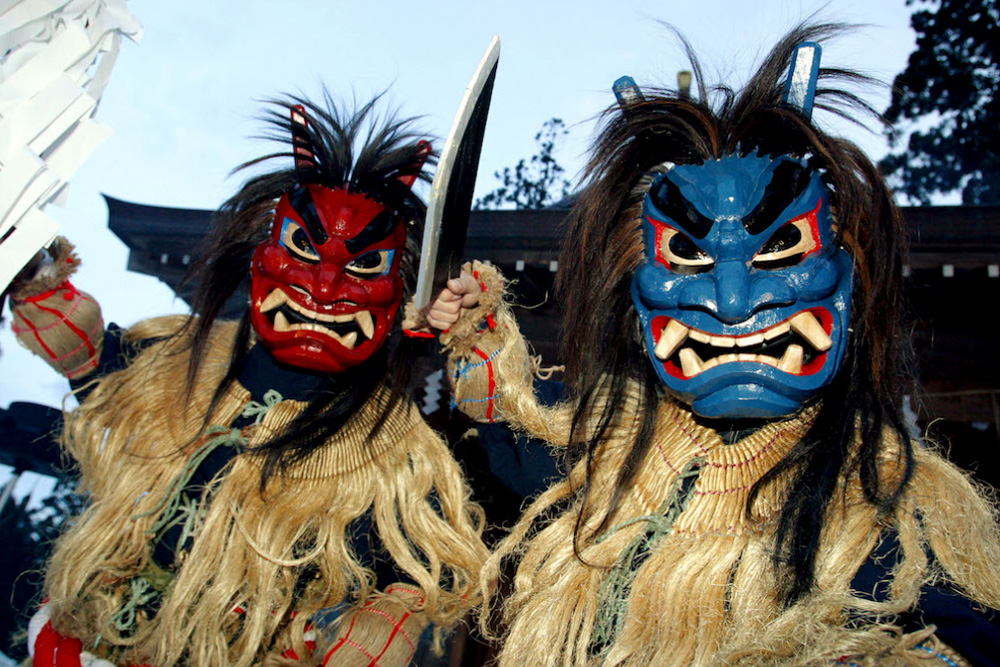
The most distinctive feature of Namahage is the unique custom where men wearing demon-like masks and straw garments go from house to house.
Appearance of Namahage:
Demon masks with frightening red or blue expressions
Straw raincoats (mino) and waist coverings made of straw
Holding a deba knife (replica) and a bucket in their hands, they shout, ‘Are there any children crying?!’
At first glance, this appearance may seem terrifying, but actually, Namahage are regarded as messengers of the gods who wish for the family’s health and a good harvest. They are cherished by the local people as figures that inspire both fear and respect.
なまはげの最大の特徴は、鬼のような面と藁の衣をまとった男たちが家々を回る独特の風習です。
なまはげの姿:
赤や青で恐ろしい表情をした鬼の面
蓑(みの)と藁で作った腰巻き
出刃包丁(レプリカ)と桶を手に持ち、「泣いている子はいませんか!」と叫ぶ
一見すると恐ろしい姿に見えますが、実はなまはげは家内安全と豊作を願う神々の使いとされ、地元の人々から畏怖と尊敬の念を抱かせる存在として大切にされています。
【Content】
The Namahage event is held every year on the night of December 31. In each village within Oga City, young men dress up as Namahage and go around visiting households.
Event Flow
Preparing the Namahage
The young men put on demon masks and straw costumes, and receive purification at a shrine.
Visiting Homes
They go around the houses shouting, ‘Are there any crying children?’ and ‘Are there any idle people?’
Interactions with Households
The head of the house welcomes the Namahage and offers them sake and treats.
Blessings and Departure
The Namahage pray for the family’s health and safety, then move on to the next house.
This interaction also serves to discipline children and strengthen family bonds. Additionally, in some regions, the event is held on January 3, so the dates and customs may vary.
なまはげ行事は毎年12月31日の夜に行われます。男鹿市内の各集落では、若者たちがなまはげに扮して各家庭を回ります。
行事の流れ
なまはげの準備
若者たちは鬼の面と藁の衣装を身につけ、神社でお祓いを受けます。
家々への訪問
「泣いている子はいませんか」「怠けている人はいませんか」と声をかけながら、各家庭を回ります。
家々への交流
家長はなまはげを迎え、酒や菓子を振る舞います。
祝福と出発
なまはげは家族の健康と安全を祈願し、次の家へと向かいます。
この交流は、子どものしつけや家族の絆を深める意味合いもあります。また、地域によっては1月3日に行われることもあり、日程や慣習は異なる場合があります。
How was it? There are still many fun things in Japan. Please be sure to try them when you visit Japan.
Let’s Enjoy!


コメント